Partnership with Franciscan University
Prospectus for 2013
Upcoming Events!!!
Who is Dietrich von Hildebrand?
What is the Legacy Project?
Why is Dietrich von Hildebrand Important Today?
What's New
Leadership
Advisory Council
A Special Appeal from Alice von Hildebrand
For Translators & Publishers
Make a Donation
Past Events
Audio/Video Archives
Annual Reports
Fellowships
Online Bookstore
Contact Us
What's New
 
Spring 2013 Featured Stories


Announcing Two Art & Design Competitions!

October 31, 2012

Dear Friends,

I have two exciting artistic opportunities to share with you. The Legacy Project has launched two separate art competitions: one for part of our new logo, the other for the covers of our new series in which we will be reprinting many of von Hildebrand's well-known books which today are often only available in costly used editions.

The Logo Competition

As you may know, the Legacy Project is in the process of a major website redesign. Along with the new website, we are developing a new logo, in which we hope to communicate both the spirit of von Hildebrand and the work of the Legacy Project.

We have reached the final stage of the logo design, where we must now go beyond the “graphic arts” feel of a regular logo to make something truly artistic, befitting the author of a two-volume work on aesthetics.

That’s where you come in.

Between today and Wednesday, Nov. 7, we are accepting submissions of initial sketches for our logo. We will select a winner on Monday, Nov. 12, who will then work with us and our design team refining the image into the perfect logo for the Legacy Project. This process may take up to two weeks and require a few revisions and iterations.

In addition to receiving wide exposure through our website, print pieces, and many events, the author of the selected work will be rewarded a $1,000 honorarium.

Here are the guidelines:

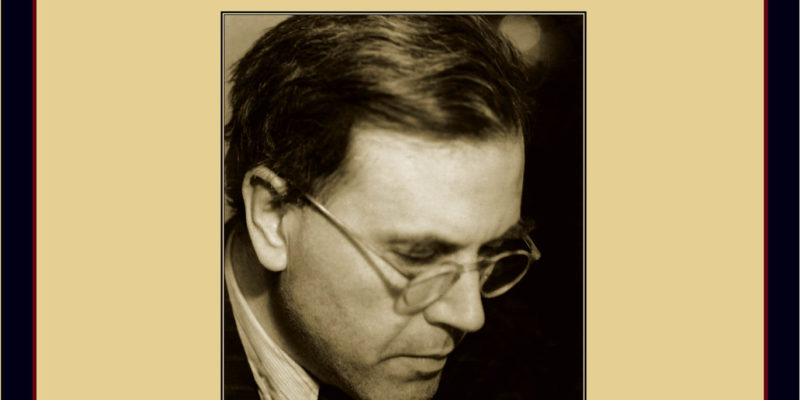
  • The logo design incorporates an image of Dietrich von Hildebrand’s face with text. You will be responsible for rendering the face.
  • The rendering will be based on this image of von Hildebrand. 
  • For the drawing to work in a logo, it must be simple, without being cartoonish. 
  • The illustration will have to be clear and communicative in a small (1/2 inch) size up to a large (1 foot) size.
  • The drawing cannot include color. 
  • We believe that a line drawing or a drawing resembling an etching might work best (but are eager to see what you come up with!). The portraits on US currency are a good example, as they are simultaneously lifelike and iconic. 
  • Please submit your illustration in a high-quality photo file, with dimensions marked.

The Book Cover Competition

Another major initiative of the Legacy Project has been the creation of new Publishing Division, the first publications of which will be a series of reprints of classic and out-of-print books by von Hildebrand. The first installment is almost ready—we’ll reveal the titles in December! But to distinguish them from previous editions, we need new covers.

That’s where you come in.

Between today and Wednesday, Nov. 7, we are accepting entries into our book cover competition. This is a fantastic opportunity to make a lasting impact on von Hildebrand studies, as your cover design will be distributed around the world for years to come.

As the books will be in a series, we are seeking a cover design that can be versioned for multiple titles. The design should be elegant, serious, and most of all, beautiful! You are encouraged to submit a design in some way aesthetically informed by the life and philosophy of Dietrich von Hildebrand. (Those who are not familiar with von Hildebrand's aesthetics are encouraged to read an essay in which he defends beauty against its utilitarian detractors.)

In addition to the tremendous exposure your work will receive, the winner will be acknowledged in each book, and receive a $1,000 honorarium.

Here are the guidelines:

  • The title of the reprint series is “Dietrich von Hildebrand Legacy Project Re-Presents”.
  • For your design, use the book title, Liturgy and Personality.
  • The books will be 6x9 in size, according to the design template here.
  • The design should include front, back, and sides. 
  • The cover will be for paperback books. 
  • The cover should be such that it can be versioned for multiple books. 
  • Some exempla of series designs we think have worked well can be found here, here, and here. 
  • The design will be in full color. 
  • The design should incorporate, on the front or the back, the photo of Dietrich von Hildebrand which can be found here here
  • Design files can be submitted as jpgs or pdfs, but should be designed in either Adobe Photoshop or Adobe Illustrator. 
  • Designs should be created at a minimum resolution of 300 dpi.

You may submit as many entries to both competitions as you like. And please feel encouraged to spread the word about these competitions to friends and colleagues.

Please email our Director of Communications, Christopher T. Haley, at chaley@hildebrandlegacy.org to express your interest in this opportunity, ask any questions about the guidelines, or submit your entries.

I look forward to seeing your creations!

Faithfully,

John Henry Crosby
Founder & Director


Professor John F. Crosby Appointed First Senior Fellow of the Hildebrand Project
Also, Major Events Announced for June 2012

Here is the Full Text of the Official Announcement of Prof. Crosby's Appointment:

Dear Friends,

On behalf of the Board of Trustees of the Hildebrand Project, we are pleased to share with you a significant announcement and also to inform you of several important and rapidly approaching events. 

First, it is our great pleasure to announce that the Board of Trustees has appointed Prof. John F. Crosby as the first Senior Fellow of the Hildebrand Project. As onetime graduate students under Prof. Crosby at Franciscan University of Steubenville, we are particularly honored and happy to share this news with you.

Prof. Crosby's appointment not only represents the culmination of his longstanding relationship with the Project—as cofounder, translator, editor, and fellow trustee—but also the Board's desire to expand and deepen the Project's intellectual infrastructure and intellectual capital. For we envision the Hildebrand Project one day being supported by an extensive roster of distinguished scholars who, as junior and senior fellows, will play a crucial role in communicating and interpreting the key ideas of von Hildebrand.

Prof. Crosby was himself a student of Dietrich von Hildebrand. Besides writing major studies on the thought of John Henry Newman, Max Scheler, and Karol Wojtyla/John Paul II, and making his own contributions to personalist philosophy, Prof. Crosby has devoted his long and distinguished academic career—first at the University of Dallas, then at the International Academy of Philosophy, and currently at Franciscan University of Steubenville—to introducing his students to the intellectual legacy of von Hildebrand, and also to making von Hildebrand better known in scholarly circles. Prof. Crosby was the translator of the English edition of von Hildebrand's philosophical masterpiece, The Nature of Love, and he also serves as the General Editor of all our present and future translations of von Hildebrand's works.

Prof. Crosby's appointment gives us the opportunity to share with you the news of our important emerging partnership with First Things, the distinguished magazine founded by the late Fr. Richard John Neuhaus. Thanks to the generous and enterprising spirit of First Things' Editor-in-Chief, Dr. R. R. Reno, the Hildebrand Project in early June will sponsor two major events at the magazine's NYC headquarters (35 East 21st Street, 6th floor).

On June 5th, beginning at 6:00pm EST, Prof. Crosby will offer a lecture with the title, "The Forgotten Voice of Dietrich von Hildebrand." Louis Bouyer once said that von Hildebrand was the most important Catholic thinker between the two world wars. Prof. Crosby will argue that von Hildebrand was not just a man for that time, but for our time as well. He will show us how to hear von Hildebrand's distinctive voice, and he will explain its perennial significance. We expect seating to be limited, so please RSVP by clicking here if you would like to attend.

Some of you will remember that in 2011, the Hildebrand Project held its first annual Summer Seminar in Alexandria, Virginia. Designed to introduce the major ideas of von Hildebrand, last summer's seminar was presented by Prof. Crosby to an audience of nearly 30 graduate students and philosophically interested people in various professions.

This year, we are pleased to announce that the Hildebrand Project will be hosting our second annual Summer Seminar, this time under the auspices of First Things magazine. Prof. Crosby will once again offer the seminar, which this year is entitled, "The Foundational Ideas in the Philosophy of Dietrich von Hildebrand." The seminar will take place on Monday June 4th, Wednesday June 6th, and Thursday June 7th, between 3:00pm and 5:30pm EST, at the editorial offices of First Things. (Note: there will be no seminar on Tuesday, June 5th, due to Prof. Crosby’s public lecture that evening). Selected readings from the major writings of von Hildebrand will soon be available for free on our website. The following topics will be covered:

  • Monday, June 4: "The place of Dietrich von Hildebrand within the Judeo-Christian Intellectual Tradition"
  • Wednesday, June 6: "Dietrich von Hildebrand and the Renewal of Moral Philosophy"
  • Thursday, June 7: "Dietrich von Hildebrand as Philosopher of the Heart"

Seating at the seminar will be limited to 28 attendees, and will be offered on a preferential basis to those who commit to participating on all three days. To express your interest in attending, please respond to this email (or write to info@hildebrandlegacy.org) with the following information: name, full contact information, academic status (if applicable), and why you wish to attend. The deadline for expressing interested is next Tuesday, May 22nd. You will be contacted no later than Friday, May 25th if we can offer you a seat.

For those of you who cannot be in NYC for the lecture or seminar, both will be presented on our website via live-streaming video. To participate, simply visit the Hildebrand Project's website during the scheduled times. Viewing will be gratis.

We thank you for your interest and continuing support of the Hildebrand Project. Please encourage your friends and colleagues to participate in our upcoming events!

With cordial best regards,

Ryan K. Lovett
Trustee

Michael Matheson Miller
Trustee


An Interview with Robert Luddy
Benefactor and Trustee of the Legacy Project

April 2012

A lifelong entrepreneur, Robert (Bob) Luddy is founder and president of CaptiveAire, Inc., a leading manufacturer of industrial kitchen ventilation systems. He is also the enterprising founder of three schools, including the St. Thomas More Academy, an independent, diocesan-approved, classical, college-preparatory and co-educational Catholic private high school based in Raleigh, North Carolina.

Bob Luddy has been an active member of the Legacy Project’s Board of Trustees since 2010, and one of the Project’s principal sustaining benefactors.
 
Recently, Bob Luddy shared with us some of his thoughts about Dietrich von Hildebrand and why he supports the Legacy Project:
 
Legacy Project: What about Dietrich von Hildebrand draws you to him as a thinker?
 
Luddy: The stress on the importance of the individual. I’ve found that there is congruence between the Austrian school of economics (to my mind, the most convincing comprehensive economic paradigm) and the work of Dietrich von Hildebrand in their emphasis on the importance of the individual over and against an emphasis on the state and on the government.
 
Legacy Project: You see relativism as a particular problem today, do you not?
 
Luddy: Relativism tricks the mind, so to speak, and allows us essentially to rationalize anything we want. If you look at the many illnesses plaguing young people today—aimlessness, pessimism, and the inability to make lasting commitments—relativism to my mind is always one of the major causes, since it undermines objective truth as the necessary basis of authentic human action. The beauty of the classics, which lie at the heart of our curriculum at St. Thomas More Academy, is that you’re building on a firm and tested foundation. In this regard, supporting the Legacy Project is an important component of our overall mission at St. Thomas More.
.
Legacy Project: How important is it to have a person like von Hildebrand who seals his ideas with his actions?
 
Luddy: It is imperative. We just can’t do without them. In my own life, I recall with gratitude, how my mother always put people before us as models, and in my life a lot of my growth has come from seeking mentors stalwart and courageous in their beliefs. It’s especially important to have these real-life examples, real people who lived in our lifetime who were profound in their leadership and were successful.
 
Legacy Project: What inspired your decision to become a major benefactor of the Hildebrand Project? Did your perspective as businessman play a role in your decision?
 
Luddy: To begin with, you’re running a highly efficient operation. You and your team are passionately involved in what you’re doing: you’re not building a big organization that consumes huge sums of money. As a businessman, that’s all highly attractive to me. Above all, if we develop even just one leader through the Legacy Project, one leader who is formed by the ideas and ideals of von Hildebrand, this one leader may very well change the world. Like the well-known story of the Irish monks saving civilization, we have to save civilization once again, and here the great insights of von Hildebrand will be invaluable in this cause.


An Interview with Kathleen McCann, Managing Editor and Director of Programs

Dietrich von Hildebrand Legacy Project

March 2012

Legacy Project: What about Dietrich von Hildebrand attracted you so much that you would want to work for several years on behalf of his legacy?

Kathleen: My desire to work at the Legacy Project was a natural expression of gratitude for all that I received from a student and friend of Dietrich von Hildebrand, Dr. John F. Crosby; who happens also to be John Henry’s father.

Dr. Crosby was head of the philosophy department at Franciscan University of Steubenville when I was a student there, and he embodied the warmth and authenticity of a good personalist. It was through Dr. Crosby that I encountered Dietrich von Hildebrand, who has the ability to open up the person to a much richer, fuller expression of their humanity.
Von Hildebrand “threw open wide the doors” of his heart to the true, the good, and the beautiful, and he felt very clearly that values call out to us for a personal response, a personal engagement. I think this is something you pick up in an encounter with him, and it is a great antidote to the isolation and hopelessness that many modern people experience. And, of course, von Hildebrand had a very keen sense of what the true, the good, and the beautiful actually are, and I think this is key, since we are certainly called today to do battle against the consequences of misplaced compassion and a faulty understanding of the human person. Both his philosophical writings and the dramatic decisions of his own life form a unified witness against ideologies which pose a threat to the dignity of the person.

I also love that von Hildebrand’s work gives such a complete account of the person, delving into the heart and the affective sphere, and giving pride of place to love.

For all this, I naturally had a desire to give back, and the Legacy Project provided the perfect opportunity.

Legacy Project: What role do you believe an organization like the Legacy Project can play in the work of renewing culture?

Kathleen: With such richness and variety, there are so many points of entry into von Hildebrand’s thought: beauty, ethics, love, liturgy, etc., and so I think this great expansiveness gives the Legacy Project a wonderful platform for engaging the culture and proposing a “value-responding” way of life which elevates the person and imbues life with a sense of the sacred.

My own path to a close heart-to-heart with the Lord came about through the combination of an encounter with great beauty in the midst of personal suffering. I grew up in an impoverished steel-town, and I remember very distinctly feeling that I had never encountered true beauty until I was exposed to orchestral music and the beauties of art and landscape in Belgium as a 15-year old girl. As a society, we often make decisions which do not favor the beautiful here in the U.S., but I think the Legacy Project is well-positioned to articulate the important power that beauty has to awaken the soul, and to foster the full integration of the person.

Legacy Project: You had the opportunity to get to know Alice von Hildebrand while working at the Legacy Project. What sort of impression has this made on you?

Kathleen: Working with Alice von Hildebrand – or  "Dr. Lily," as I was privileged to call her – has been a great delight, and I have a special place in my heart for her. Growing up, I spent a year in Belgium, Dr. Lily’s native country – it was a wonderful, but in many ways very difficult year, and one which prepared the ground of my heart for a personal encounter with Christ. Knowing Alice and now having the opportunity to edit her memoirs has been, for me, a nice way to bring that experience full-circle, getting to connect with her about some of her experiences as a child in Belgium, and her own relation to the faith. It is also been a great privilege to witness first-hand the immense admiration she had for her husband, whom she dubs a “Knight for Truth”.

Legacy Project: Do you have a cherished memory of your work at the Legacy Project?

Kathleen: My most cherished memory of working with the Legacy Project occured while in Rome, during our stay there for the conference on The Nature of Love. I was able to reconnect with a former student of mine, to whom I had introduced the works of von Hildebrand in the classroom, and who went on to study philosophy in Rome, en route to becoming a cultural leader and advocate for purity in Europe.

On one fine afternoon, it just worked out to have him help me escort Dr. Lily to lunch. I can still see him, waiting to meet us in front of Santa Croce University, in Austrian dress, with an old first-edition copy of one of Dietrich’s books for her to sign. They both told me afterwards how much the encounter had meant: she to see such a fine young European so committed to high ideals, and he to hear echoed by a wise voice from an older generation all his same insights into life, culture, the consequences of the contraceptive-mentality, everything. It was a very special moment.

I also have really enjoyed the opportunity to get to know other close collaborators and devoted supporters of the Project – Bob Luddy and his wife, Maria, Alice Ann Grayson, Michael Novak, and many others.

Legacy Project: What will you take away with you from your years of working at the Legacy Project?

Kathleen: Mostly, I think what I will take away is all that I have learned from working with John Henry: both in terms of his innovative style, and also in terms of the project management skills necessary to keep up with his innovative style! I will take away the satisfaction of having been at the service of Dr. Lily, and helping her and John Henry promote the work of her husband so that, hopefully, many others will be touched and changed in some way.

Legacy Project: What is your next mission in life?

Kathleen: My next mission in life is to take up several projects which have been simmering on the back-burner, all of which involve in some way fostering peace and order in the domestic sphere. One of those projects that I am working on is the creation of a small home oratory, which would be a beautiful and practical way for families to dedicate a place in the home to prayer. I am working with a skilled wood-worker in Front Royal (Virginia), who is making the prototype, and I hope to begin producing those in Steubenville (Ohio) soon.

Von Hildebrand writes in the introduction to the as-yet unpublished Aesthetics, “People have grown accustomed to the elimination of the poetry of the world, to the mechanization of life, to the expulsion of beauty; but this does not lessen the real impact on human happiness of a world in which an organic, truly human life has lost its charm.” I want to find ways to invite a little poetry back into the world.


An Interview with Dr. Daniel P. Schmidt, Vice President for Program

The Lynde and Harry Bradley Foundation

The Lynde and Harry Bradley Foundation, based in Milwaukee, Wisconsin and active throughout the United States and around the world, has a distinguished history of funding critical initiatives dedicated to sustaining and defending the intellectual and cultural foundations of a free and virtuous society.
 
The Bradley Foundation was one of the major underwriters of "The Christian Personalism of Dietrich von Hildebrand: Exploring his Philosophy of Love," the Legacy Project's premiere conference to date held in Rome at the Pontifical University of the Holy Cross in May 2010. We recently had a chance to sit down with Dr. Schmidt to ask how the conference fit within the Bradley Foundation's purview. Below is the transcript of our interview.
 
Legacy Project: The Bradley Foundation has been one of the major actors in conservative grant-making over the past 25 years. Given the Foundation’s emphasis on political and economic liberty, a conference on the philosophy of love does not seem a likely candidate for Bradley funding—at least at first glance. How does this conference fit into the Foundation’s funding mission?


Dr. Schmidt: In the first public statement of its funding mission in 1986, the Foundation’s board of directors recalled the Bradley brothers’ (Lynde and Harry) deep commitment to our American way of life, our democratic principles, and our institutions. Preserving and protecting the dignity of the human person is essential in order for our citizens to be able to freely pursue their God-given abilities. It is this vision that informs what we do and drew our attention to the work of the von Hildebrand proposal for a consideration of his philosophy on love.

Legacy Project: What does the Foundation hope to achieve through its support of our Rome conference?

Dr. Schmidt: For us ideas have consequences and in von Hildebrand we have one of a number of key Western intellectuals whose thought needs a wider audience, particularly at this moment. I have in mind here the current attack on the institution of marriage and the subsequent deterioration of family life in the West. And in helping to make this work more accessible to others, it offers the Bradley Foundation a way to make a statement about the Bradley brothers’ abiding commitment to a central tenet of the Judeo-Christian identity of the Western tradition.

Legacy Project: Donors typically invest in concrete, definable, measurable returns. For this reason, they often eschew supporting intellectual inquiry, which they see as abstract, imprecise, and unlikely to create real-world change. Do you agree with this typical assessment of intellectual inquiry?

Dr. Schmidt: Unfortunately, over the past ten years, some part of conservative philanthropy has been seduced by an approach that has informed liberal foundations for many years, namely the conviction that—owing to their unique gift for understanding the human condition—a foundation can engineer a desired and predictable reform of this or that social problem. All of this leads of course to the temptation to narrow your choice of funding opportunities to only those projects that will seemingly create the desired result most directly. Conservative philanthropy has been at its best when it acts according to its instincts regarding the human condition. When it does, the importance of ideas, their application in the real-world, and the likelihood of unintended consequences take center stage.

Legacy Project: Today, one of the most momentous public debates centers on the nature of marriage—is it an enduring bond between a man and a woman, or does it admit two members of the same gender? Proponents of both positions often cite sociological and statistical data in support of their position, but do you believe this suffices to make a credible and persuasive case? Do not the deepest sources of knowledge in this debate lie in philosophy and even in theology?

Dr. Schmidt:
Love between a man and a woman, as it is realized through the institution of marriage, is a most sacred expression of our dignity as human beings. Evidence over the centuries has shown this to be true. Reading von Hildebrand serves to confirm both the historical facts and your human instincts as well—assuming you are willing to trust them. In fact, reading von Hildebrand on this matter is all the more necessary if you doubt those instincts.

Legacy Project: How can grant-makers promote authentic and truth-seeking discussion of the great questions facing humanity today, while not reducing the scholars they support to “intellectual mercenaries”?

Dr. Schmidt:
Proper moral and intellectual formation can be helpful in this regard. An examination of von Hildebrand’s life and work would be good to include in anyone’s formation lesson plan, both to guard against the danger philanthropists face (thinking that it is ultimately only their insight, their instruction, their intervention that finally makes the world go round), and also the danger that recipients face (the temptation to sacrifice the means to the ends).

Legacy Project: What can conservative scholars learn from professional grant-makers? What in your view would make the Legacy Project more effective in attracting major donor support, including future interest from the Bradley Foundation?

Dr. Schmidt: Scholars, whatever their ideological motivation, should pursue the subject matter dictated by their training, expertise, and interests. Funders might have some useful suggestions about project timing or methods to increase the visibility of a scholar’s ideas, but they won’t be much help on the line of inquiry. Von Hildebrand’s work speaks for itself. Step by step—a translation, a publication, a conference that draws financial support—it all builds the case. Identifying those willing to financially support the effort requires shoe leather and some good fortune.

Legacy Project:
As a grant-maker, is there anything you find particularly attractive about the Legacy Project? Does the lightweight infrastructure add or diminish the appeal? Would you encourage other major conservative grant-makers to undertake support of the Project?

Dr. Schmidt:
I would encourage other likeminded funders to consider the Hildebrand Project for the reasons you have posed in the questions above. Von Hildebrand’s work is a serious inquiry into fundamental philosophical and theological questions of concern to us all. His intellect, scholarly training, skill as a writer, and to say the least, his life experiences, commends him to many if not all conservative funders interested in the issue of Christian identity.

The fact that the Legacy Project has the support—financial and otherwise—of such prominent individuals speaks for itself. The Project’s modest administrative costs are a plus. And, finally, the commitment and passion of the staff leading this effort inspires confidence in its successful conclusion.

For more information about the Bradley Foundation, please visit www.bradleyfdn.org


Introducing Fr. Brian McNeil, Master Translator

Fr. Brian McNeil is nearing completion on the monumental project of translating von Hildebrand's two-volume Aesthetics, which has never before been translated into English. In addition to his work on von Hildebrand, Fr. McNeil has translated works by Pope Benedict XVI, Hans Urs von Balthasar, Christoph Cardinal Schönborn, and other major theologians, not to mention a couple volumes of Norwegian poetry! A truly international man, Fr. McNeil was born in Scotland, and by way of Norway and Italy, is currently the pastor of St. Michael’s Catholic Church, the largest parish in Munich. For a complete biography and bibliography and to learn more about Fr. McNeil at his personal website, please click http://www.brian-mcneil.de.

Interview with Fr. Brian McNeil, Translator of Dietrich von Hildebrand's Aesthetics

Legacy Project: Fr. McNeil, it is astonishing that you translate German, English, Italian, and Norwegian; can you tell us how you came to be fluent in so many languages?

Fr. McNeil: I learned French at school. When I began work on my doctorate, the Professor said: “You can’t study theology without German.” He then sent me to Göttingen for one semester – but his idea was that I should simply be there and absorb German as a child absorbs a language. I was not to take any courses in the language, just be in Germany. It sounds crazy, but it worked. After three months, I spoke German!

Legacy Project: And how did you come to translation?

Fr. McNeil: I would in fact say it is part of my vocation. God has given me linguistic gifts and the ability to develop them. This means that I can be a kind of “bridge” in the church, whether between the Pope and English-speaking readers or between German/Norwegian/French/ Italian theologians and English-speaking readers. We don’t have one common language in the worldwide Church, and that makes it very important to have translators!

Legacy Project: When you first began working with the Legacy Project, you were essentially new to Dietrich von Hildebrand. Having immersed yourself in his thought, especially the Aesthetics, what has Dietrich von Hildebrand come to mean to you?

Fr. McNeil: The answer is that I don’t yet know. When you translate, you have a relationship to the individual sentence or paragraph or chapter, but you are so close to the trees that you can’t see the wood as a whole. I think this is inevitable – but the disadvantage, of course, is that you sometimes are TOO close to the individual tree. That is then the great advantage of having someone like Professor John Crosby who sees the wood as a whole. He can then say, “Well, no, von Hildebrand tends to use this German term to mean such-and-such.”

Legacy Project: You are the translator of several volumes of Ratzinger and von Balthasar; do you see any parallels between those two thinkers and von Hildebrand?

Fr. McNeil: I now have a global view of Ratzinger and von Balthasar. I am sure that I will have a global view of von Hildebrand. But not yet! That will come when I have finished the translation and can sit back and look at his work “from the outside,” so to speak. At the moment, I would simply say that I am impressed by the depth in his writing against the Nazis – it is never mere political polemic. And I am impressed by a quality in his Aesthetics that one can only call “majestic” and “immensely comprehensive.”

Legacy Project: The numbers of works you've translated is truly staggering, and you accomplish this while serving at Munich's largest parish. How do you do it?

Fr. McNeil: I don’t really know. God gives me 24 hours every day. I don’t translate “at the expense” of prayer or pastoral work. But there is a lot of time to do it. I would say, once again, that it is a part of my vocation.

Legacy Project: Final question: Last year around the holidays, you mentioned a certain smooth-hair collie you were hoping to bring home. How is she?

Fr. McNeil: My last dog died at New Year. Her successor is now born, and is two weeks old. She will assume her official duties as “parish dog” (well, I say “official,” though there is no decree of nomination by the Cardinal) in mid-December.

Legacy Project: Thank you, Fr. McNeil. We are honored to have you working with us at the Legacy Project.